

From Abracadabra to Zombies | View All
Kirlian photography (electrophotography)
In 1939,
Semyon Kirlian discovered by accident that if an object on a photographic
plate is subjected to a high-voltage electric field, an image is created on the plate. The
image looks like a colored halo or coronal discharge. This image is said to be a physical
manifestation of the spiritual aura or "life force" which allegedly surrounds
each living thing.
photographic
plate is subjected to a high-voltage electric field, an image is created on the plate. The
image looks like a colored halo or coronal discharge. This image is said to be a physical
manifestation of the spiritual aura or "life force" which allegedly surrounds
each living thing.
Allegedly, this special method of "photographing" objects is a gateway to the paranormal world of auras. Actually, what is recorded is due to quite natural phenomena such as pressure, electrical grounding, humidity and temperature. Changes in moisture (which may reflect changes in emotions), barometric pressure, and voltage, among other things, will produce different 'auras'.
Living things...are moist. When the electricity enters the living object, it produces an area of gas ionization around the photographed object, assuming moisture is present on the object. This moisture is transferred from the subject to the emulsion surface of the photographic film and causes an alternation of the electric charge pattern on the film. If a photograph is taken in a vacuum, where no ionized gas is present, no Kirlian image appears. If the Kirlian image were due to some paranormal fundamental living energy field, it should not disappear in a simple vacuum (Hines 2003).
There have even been claims of electrophotography being able to capture "phantom limbs," e.g., when a leaf is placed on the plate and then torn in half and "photographed," the whole leaf shows up in the picture. This is not due to paranormal forces, however, but to fraud or to residues left from the initial impression of the whole leaf.
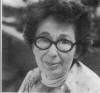 Parapsychologist
Thelma Moss popularized Kirlian photography as a diagnostic medical tool with her books The
Body Electric (1979) and The Probability of the Impossible (1983). She
was convinced that the Kirlian process was an open door to the "bioenergy" of
the astral body. Moss came to UCLA in mid-life and earned a
doctorate in psychology. She experimented with and praised the effects of LSD and was in
and out of therapy for a variety of psychological problems, but managed to overcome her
personal travails and become a professor at UCLA’s Neuropsychiatric Institute. Her
studies focused on paranormal topics, such as auras, levitation and ghosts. One of her
favorite subjects at UCLA was Uri Geller, whom she
"photographed" several times. She even made several trips to the Soviet Union to
consult with her paranormal colleagues. Moss died in 1997 at the age of 78.
Parapsychologist
Thelma Moss popularized Kirlian photography as a diagnostic medical tool with her books The
Body Electric (1979) and The Probability of the Impossible (1983). She
was convinced that the Kirlian process was an open door to the "bioenergy" of
the astral body. Moss came to UCLA in mid-life and earned a
doctorate in psychology. She experimented with and praised the effects of LSD and was in
and out of therapy for a variety of psychological problems, but managed to overcome her
personal travails and become a professor at UCLA’s Neuropsychiatric Institute. Her
studies focused on paranormal topics, such as auras, levitation and ghosts. One of her
favorite subjects at UCLA was Uri Geller, whom she
"photographed" several times. She even made several trips to the Soviet Union to
consult with her paranormal colleagues. Moss died in 1997 at the age of 78.
Moss paved the way for other parapsychologists to speculate that Kirlian "photography" was parapsychology's Rosetta stone. They would now be able to understand such things as acupuncture, chi, orgone energy, telepathy, etc., as well as diagnose and cure whatever ails us. For example, bio-electrography claims to be:
...a method of investigation for biological objects, based on the interpretation of the corona-discharge image obtained during exposure to a high-frequency, high-voltage electromagnetic field which is recorded either on photopaper or by modern video recording equipment. Its main use is as a fast, inexpensive and relatively non-invasive means for the diagnostic evaluation of physiological and psychological states. [from the now-defunct http://www.psy.aau.dk/bioelec/]
There is even a bioresonant clothing line that has emerged from the
"study" of bio-electrography; it's allegedly based on "an astonishing new theory in
bio-physics: that the information exchange in human consciousness can be
directly influenced and enhanced by vibrations of Light [sic], that we
call colors."
has emerged from the
"study" of bio-electrography; it's allegedly based on "an astonishing new theory in
bio-physics: that the information exchange in human consciousness can be
directly influenced and enhanced by vibrations of Light [sic], that we
call colors."
 Another promoter
of bio-electrography is Russian "scientist" Konstantin Korotkov,
promoter of a bio-electrographic camera called Gas Discharge Visualization
instrument.
Another promoter
of bio-electrography is Russian "scientist" Konstantin Korotkov,
promoter of a bio-electrographic camera called Gas Discharge Visualization
instrument.
Mosby's Dictionary of Complementary and Alternative Medicine defines 'gas discharge visualization' as:
the appearance of images of the fluorescence (and, some argue, the biofield or aura) that surrounds living tissue after it has been exposed to a high-intensity field of electricity. The term describes both the technique and the device used. Also called bioelectography, biological emission and optical radiation stimulated by electromagnetic field amplified by gas discharge with visualization through computer data processing, Kirlianography, or Kirlian photography. (emphasis added)
Skunkweed by any other name is still skunkweed. All these names are names for electrophotography.
The GVC instrument uses glass electrodes to create a
high-intensity pulsed electrical field into such things as living or dead
tissue, resulting in fluorescence that is photographed. The resultant
images (Kirlian photographs)
are then used to stimulate the imagination to speculate about auras,
spirits, energy, biofields, etc. Scientists at the University of Arizona's
program in integrative medicine have used GVC to try to differentiate
homeopathic solutions (water) from each other and from controls (more
water).* Korotov claims he gets different images when he
uses his GVC on people who have died calmly or violently. He claims that
one who dies in a calm, natural manner slowly loses his 'aura' after 36
hours; whereas, someone who suffers a sudden, violent death loses his
'aura' suddenly after 72 hours. He also claims that when a person commits
suicide his 'aura' disappears after a week. In addition to an
elaborate attempt at alternative physics, Korotov has added another name
to the above list of names for GDV: electrophotonics.
He also claims that when a person commits
suicide his 'aura' disappears after a week. In addition to an
elaborate attempt at alternative physics, Korotov has added another name
to the above list of names for GDV: electrophotonics.
Korotov joins Gary Schwartz and William Tiller in promoting what many in the alternative world consider "the next level of healing for humanity": reconnective healing, which was invented by chiropractor Eric Pearl and is just one of many forms of energy medicine now proliferating sCAM. The GVC is a device that appears to give scientific credibility to Kirlian photography's role in diagnosis (and who knows what else) in energy healing. Reconnective healing supposedly involves more light and energy at better frequencies than other forms of energy medicine, but this claim remains, shall we say, controversial. (For those seeking more information on this new level of alternative thinking, I note that Tiller is featured in What the Bleep Do We Know? and Pearl has a bit part in Something Unknown is Doing We Don't Know What.)
The reliability of diagnosing illnesses by photographing auras is not very high, however. Bio-Electrography or GVC should not be confused with Esogetic Colorpuncture, Peter Mandel's therapy, which unites acupuncture and Kirlian photography "to detect energy imbalances."
None of these Kirlian methods of diagnosis should be confused with other types of medical photography, e.g., roentgen-ray computed tomography, magnetic resonance imaging, single photon/positron emission computed tomography and other useful types of medical imaging, none of which have anything to do with auras.
See also theratest machine.
further reading
books and articles
Abell, George O. and Barry Singer (eds.) Science And Paranormal (New York: Scribner, 1981).
Hines, Terence. Pseudoscience and the Paranormal, 2nd ed. (Buffalo, NY: Prometheus Books, 2003).
Randi, James. Flim-Flam! (Buffalo, New York: Prometheus Books,1982),
websites
Energy Healing: Looking in All the Wrong Places by Robert Todd Carroll
The Living Matrix: A Movie Promoting Energy Medicine Beliefs: a movie review by Harriet Hall, M.D.
It purports to be a documentary about the “new science of healing” but really amounts to an infomercial for various forms of quackery based on so-called “energy medicine.” It’s not about science, but about pseudoscience and mythical misinterpretations of physics and quantum theory. It says things that are simply not true and misrepresents them as indisputable scientific facts. The film features interviews with patients, with non-scientists, and with a veritable Who’s Who roster of infamous fringe scientists like Rupert Sheldrake and Dean Radin. But it doesn’t offer a single word of comment by any mainstream scientist or by the many skeptics who have examined the “evidence” for so-called energy medicine and found it pathetically inadequate. It doesn’t even acknowledge that dissent is possible....
These people are not seeking the truth: they are certain that they already know the truth and they are only seeking to persuade others to accept their belief system. The Living Matrix made my brain hurt. It was only worth watching as an appalling demonstration of the human capacity for self-deception and as a reminder of how badly our error-prone human brains need the discipline of rigorous science and critical thinking.
The Living Matrix also features such luminaries from the world of alternative thinking as Edgar Mitchell, Lynne McTaggart, Eric Pearl, Marilyn Schlitz, and Adam Dreamhealer.
The Energy Fields of Life by Victor J. Stenger
Aura Photography: a Candid Shot by Joe Nickell
Human Energy Fields? by Eric Krieg
Can Kirlian Photography Detect Diseases? by George Nava True II
Wikipedia entry on Kirlian photography
Cool images at Plasma and High Voltage Electricity


 kinesiologist